Introduction: We experienced a lab where aluminum turned a rusty color caused from burning
we used Copper Pentahydrate and aluminum foil
Purpose: to become familiar with the laboratory and to make qualitative and quantitative observations about physical and chemical changes during a chemical reaction.
Hypothesis: we hypothesized that the aluminum foil and copper (II) sulfate pentahydrate would have a reaction that would cause bubble like foaming.
Background Info:
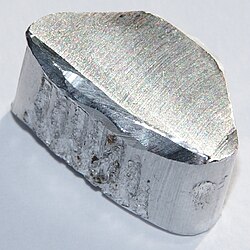


Materials:
-Beaker (150 or 250 ml)
-copper (II) sulfate pentahydrate-caution, toxic substance
-scoopula
-100ml graduated cylinder
-stirring rod
-thermometer
-small square of aluminum foil
-Sodium ChlorideProcedures:
1.) Form a lab group of two or three people, first when entering the lab grab an apron and goggles.
2.) Go to the appropriate source and add some water in your beaker. (The exact amount is not important, although it should be between 75 and 100ml.
**It is important throughout the experiment to take note of quantitative and qualitative observations of the physical and chemical properties.
3.) Now using the scoopula, obtain some of the copper (II) sulfate pentahydrate. (Again the exact amount is not important, but your scoopula should be about 1/4 filled with the solid)
4.) Place the CuSO4 5H20 in the beaker, and stir with the stirring rod until all the solid has dissolved.
5.) Obtain the aluminum foil sample in front of you and crumple it into a loose ball.
6.) Place the aluminum ball into the copper (II) sulfate solution, and stir gently for about 15 sec.
**write down detailed observations of everything you see.
7.) Make sure your scoopula is clean (rinse with tap water and dry with a paper towel if not) and obtain a large scoop of sodium chloride (salt) from the labeled container.
8.) Add the NaC1 to the beaker containing the copper (H) sulfate- aluminum mixture.
9.) Stir until all of the sodium chloride is dissolved.
Clean Up
1.) After about 10 min, take your beaker over the large funnel and beaker and slowly pour your mixture into the beaker.
2.) Then clean your beaker thoroughly with soap and tap water, and then a final rinse with distilled water.
3.) Make sure your lab station is clean; return all safety equipment to its proper location.
Data:
Through the entire experiment we measured the temperature of the mixture at each stage.
-The tap water was 23.2 degrees Celsius
- Copper (II) sulfate pentahydrate took a long time to dissolve into the water and become a homogenous mixture but once it did, the solution never separated or settled.
-We also measured the solution's temperature at this stage and it had risen to 27.4 degrees Celsius.
- After we added the aluminum foil ball the mixture had bubbles appear when we stirred it; however we were unsure if it was from the foreign object creating a disturbance or a reaction.
- We again measured the mixture at this stage and were surprised to find out the temperature had dropped to 26.2 degrees Celsius.
- As soon as we added the sodium chloride (salt) we immediately saw a change, the sodium chloride that had sunk to the bottom began to turn yellow as we stirred it and then little pieces of the aluminum foil ball began to break off and sink to the bottom. It looked like little rusted pieces but we decided it was simply the copper attaching itself to the aluminum which caused it to flake off from the original ball.
- We also realized that the solution was now putting off an odor that smelled a lot like copper as well as a vapor that resulted from the temperature rising. The temperature rose so quickly that there was a difference in temperature of the glass, the solution got surprisingly warm, and it reached 37.9 degrees Celsius.
- By the end of the experiment the aluminum ball was almost completely broken apart and its pieces had sunk to the bottom of the beaker with the copper attached to them.
Discussion:
This was a very interesting experiment in the sense that it started off slow, with little or no reactions, but once we added the sodium chloride (salt) the entire mixture changed and began to react. The temperature went from the lowest 23.2 degrees Celsius to the highest 37.9 degrees Celsius, and because there was no heat added we can say that this was a complete chemical reaction. The reaction was big enough to cause the aluminum foil ball to flake off and ultimately just become little pieces.
Conclusion:
We reject our hypothesis, because there was no visible bubbling even though the heat did rise very quickly there was little or no actually bubbling. However, if we had more time we would have like to see what more sodium chloride or more aluminum foil would do, if it would actually create foaming bubbles.
FUN FUN FUN!


Just Poke At The Yellow!!!!
Just keep stirring, just keep stirring, just keep stirring, stirring, stirring... what do we do we stir, stir, stir!
Great start on your blog! I like how you put humor in it. It made it more interesting. I also like your background! May be add more color to it besides red and orange. But it looks great the way it is!!!
ReplyDeleteI love your background! It is very colorful and bright, however; I would add to your materials Sodium Chloride. It is something used in the experiment, but it isn't in the material list.
ReplyDeleteI love your blog!!! There is tons of information and it is entertaining to read!! Also I love the background information you put on here! One thing is the the white makes it kinda hard for me to read all of the text.
ReplyDeletepositive- like how you put your own little touch to how you wrote your blog.
ReplyDeletenegative- add everything that we used in the lab cause you left out Sodium Chloride.
Okay, Im Sort Of Confused With Your Blog? Hahaa Its All Over The Place & Its Not Spaced Out Very Well. Work On That. Other Wise- Good Job :]
ReplyDeleteneeds to be easier to read its smashed together but nice touch with the videos
ReplyDelete